
Michael Adams, affectionately known as "Mickey" or "The Spider" in chess circles, stands as one of the most accomplished and consistent grandmasters in the history of English chess. Born on 17 November 1971 in Truro, Cornwall, Adams has built a career defined by remarkable longevity, technical precision, and a quiet determination that has seen him compete at the absolute highest levels for over three decades. His peak world ranking of No. 4 and Elo rating of 2761 (the highest ever by an English player) underscore his elite status, while his nine British Championship titles mark him as a dominant force in national chess.
Adams' style is often described as spider-like: patient, positional, and capable of weaving intricate webs that ensnare opponents through superior understanding and endgame mastery. Unlike flashier players who rely on sharp tactics, Adams excels in subtle maneuvering, deep preparation, and converting small advantages. His career trajectory—from a prodigious junior in rural Cornwall to a World Championship finalist—exemplifies steady, disciplined growth rather than meteoric bursts.
Early Years and the Spark of Talent
Adams entered the world in the picturesque county of Cornwall, the southwestern tip of England. His father, Bill Adams, introduced him to chess at the age of six. What began as a family pastime quickly revealed exceptional aptitude. By age nine in 1981, young Michael dominated local competitions, winning the Cornwall Under-9 Championship and sweeping the Under-13, Under-15, and even Under-18 titles in the same event. The logistical challenge of playing multiple age groups simultaneously highlighted his focus and composure.
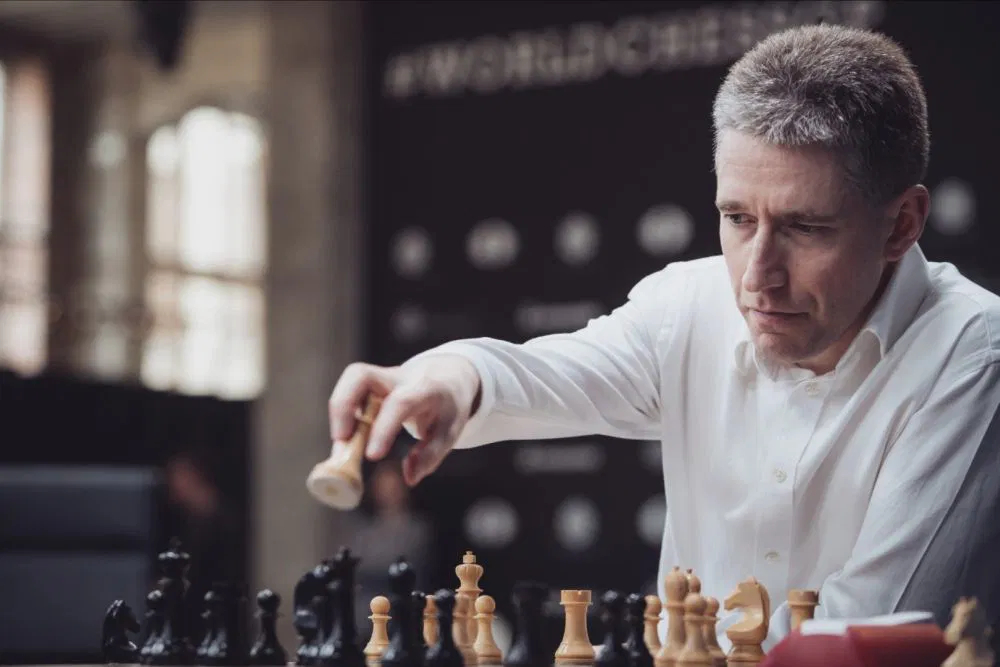
The British Chess Federation recognized his potential early, providing coaching from former European Junior Champion Shaun Taulbut and local expert Michael Prettejohn. This structured support accelerated his development. In 1987, at age 15, Adams achieved international prominence by taking silver at the World Under-16 Championship in Innsbruck, behind Iceland's Hannes Stefánsson. That same year, he became the world's youngest International Master at the time, a record that underscored his rapid rise.
Adams' early success was documented in two books co-authored with his father: Development of a Grandmaster (1991) and Chess in the Fast Lane (1996). These works offer insights into his methodical approach, blending natural talent with rigorous study. A 1988 television documentary featuring Adams and fellow rising star Gary Lane further brought his story to a wider audience. Educated at Truro School, he balanced academics with an intensifying chess schedule, a foundation that contributed to his lifelong professionalism.
Path to Grandmaster and First National Triumphs
Adams earned the Grandmaster title in 1989 at the age of 17, a significant milestone that placed him among the youngest holders at the time. That same year, he claimed his first British Chess Championship title at just 17—the youngest winner in the event's history. This victory set the tone for a career intertwined with national dominance.
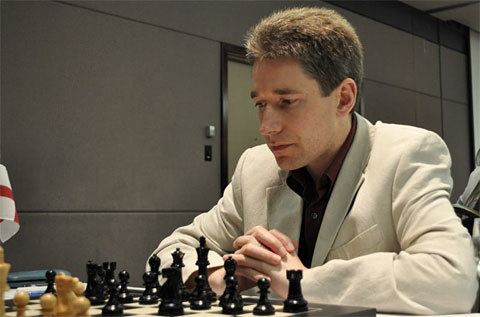
His junior and early adult results demonstrated consistent improvement. He shared or won various youth titles and performed solidly in open tournaments. The late 1980s and early 1990s saw him transition from promising talent to established contender. Wins like first place at Terrassa in 1991 signaled his growing international credentials.
World Championship Contender: The Knockout Era
The 1990s marked Adams' ascent into the global elite. The introduction of knockout formats in FIDE World Championships suited his resilient, match-play style. In 1993, he tied for first with Viswanathan Anand in the Groningen Interzonal, qualifying for the Candidates. He defeated Sergei Tiviakov but fell to Anand in the semifinals.
Adams reached the semifinals of the 1997 FIDE World Championship knockout, defeating strong opponents including Tamaz Giorgadze, Sergei Tiviakov, Peter Svidler, Loek van Wely, and Nigel Short before losing to Anand in a dramatic rapid-play finish. Similar deep runs followed in 1999 and 2000, where he again reached the semifinals.
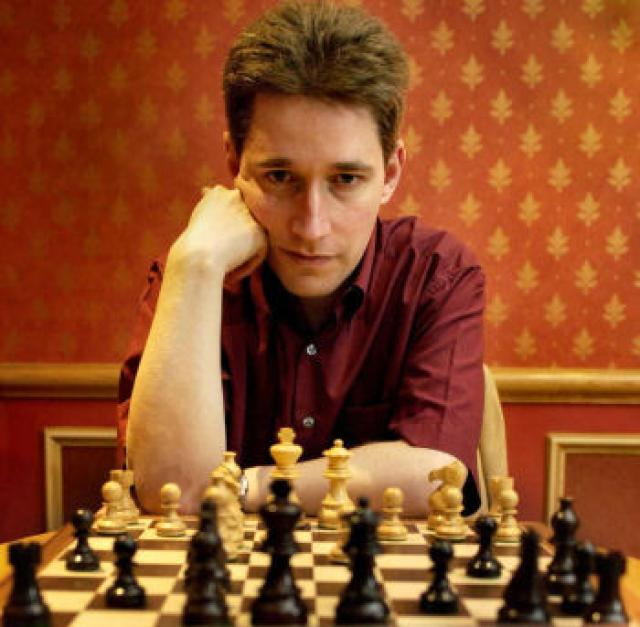
His crowning achievement in world title contention came in 2004. Seeded into the FIDE World Championship, Adams navigated a grueling knockout, defeating players like Hikaru Nakamura, Vladimir Akopian, and Teimour Radjabov to reach the final against Rustam Kasimdzhanov. The classical games ended in a 3-3 tie, but Kasimdzhanov prevailed in the rapid tiebreaks (3½–4½ overall). This near-miss remains one of the closest any English player has come to the world crown in the modern era. Adams qualified for the 2005 World Championship as runner-up but finished equal sixth-seventh.
These campaigns showcased Adams' tactical alertness under pressure and his ability to prepare deeply for specific opponents. Though he never claimed the ultimate title, his consistent qualification among the world's best affirmed his place in the elite.
Peak Rating and Tournament Dominance
Adams' rating climbed steadily. He entered the world top 10 in 1996 and surpassed 2700 in 1998. His peak of 2761 in September 2013 remains the English record, nearly 50 points ahead of the next best. He achieved world No. 4 multiple times between 2000 and 2002.
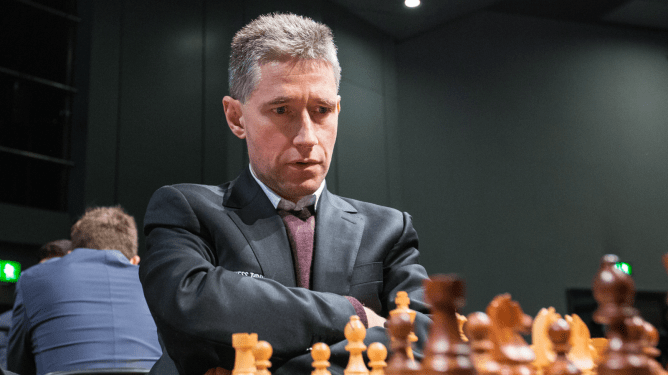
Notable tournament victories dotted his career. He shared first at Dos Hermanas 1995 with Gata Kamsky and Anatoly Karpov, won outright in 1999 ahead of a star-studded field including Kramnik, Anand, and Judit Polgár. Joint first at Dortmund 1998 (with Kramnik and Svidler) and a standout performance at Dortmund 2013 (7/9, 2925 performance rating) highlighted his ability to outperform higher-rated fields.
In 2007, he won the Howard Staunton Memorial with 8½/11, followed by another victory in 2008. Other successes included the Ruy Lopez Masters in Mérida 2008, Gibraltar 2010, and strong showings at the London Chess Classic and Bunratty. Team events saw him contribute gold medals, notably on board one at the European Team Championship.
Adams also faced technological challenges. In 2005, he played a match against the supercomputer Hydra in London, scoring only half a point in six games. The experience illustrated the growing power of engines while highlighting human creativity's nuances.
British Championship Legacy and Later Career
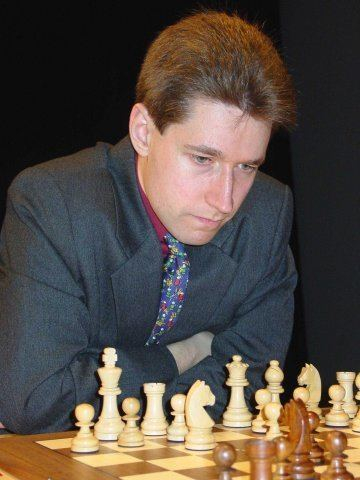
After his early titles in 1989 and 1997, Adams stepped back from the British Championship to focus on international events. His return yielded a remarkable streak: victories in 2010, 2011, 2016 (with a record-tying 10/11), 2018, 2019, 2023, and 2025—bringing his total to nine. This ties him with historical great Henry Atkins and places him one behind Jonathan Penrose's record. His 2025 win in Liverpool, secured via rapid playoff, demonstrated enduring competitiveness at age 53.
In 2023, Adams won the World Senior Chess Championship (Over-50 category) in Terrasini, Italy, adding a world title to his résumé alongside teammate John Nunn. He continues to rank among the world's top 100, a testament to his fitness and adaptability.
Personal Life and Playing Style
Adams married actress Tara MacGowran in 2007 in Taunton, Somerset, where the couple resides. He maintains a low public profile, focusing on chess preparation, writing, and occasional commentary. His official website and books, including collaborations like Think Like a Super-GM, reflect a commitment to sharing knowledge.
As "The Spider," Adams is renowned for patient defense, prophylactic play, and converting endgames. His opening repertoire is solid and well-prepared, often steering games into complex middlegames where his superior understanding prevails. Colleagues praise his sportsmanship and analytical depth.
Legacy and Impact
Michael Adams' career spans chess's transformation from pre-computer era to the digital age. He has faced every major player of his generation—from Kasparov and Karpov to Carlsen and beyond—accumulating victories and drawing respect for his consistency. As one of England's greatest, he has inspired generations of British players while upholding high standards of professionalism.
His trajectory—from Cornish junior to global contender and senior champion—embodies dedication over decades. With nine national titles, a World Championship final appearance, and a peak ranking that places him among the all-time greats, Adams' record ensures his place in chess history. Even in his mid-50s, he remains a formidable competitor, proving that chess excellence is as much about sustained passion and refinement as youthful brilliance.