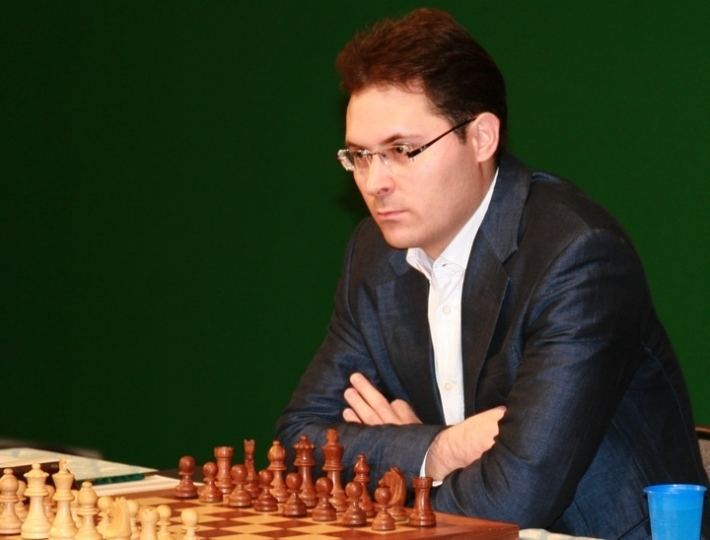
Peter Leko (Hungarian: Lékó Péter), born on September 8, 1979, in Subotica, Yugoslavia (now Serbia), is a Hungarian chess grandmaster, commentator, and one of the most consistent elite players of the late 20th and early 21st centuries. He earned the grandmaster title at the age of 14 years, 4 months, and 22 days in 1994, becoming the youngest in the world at the time and breaking Judit Polgár’s record. Leko reached a peak FIDE rating of 2763 in April 2005 and a peak world ranking of No. 4 in April 2003. He challenged Vladimir Kramnik for the Classical World Chess Championship in 2004, drawing the match 7–7 before Kramnik retained the title on tiebreak rules. Leko also placed fifth in the 2005 FIDE World Championship and fourth in the 2007 unified World Championship.
Known for his exceptional solidity, deep opening preparation, and “Iron Man” reliability, Leko won major tournaments including Dortmund (multiple times), Linares, Wijk aan Zee (Corus), and the Tal Memorial, completing a career Grand Slam of elite events. He represented Hungary in eight Chess Olympiads, contributing team silvers and an individual gold. Though sometimes critiqued for drawish tendencies, his results speak to a formidable defensive player and dangerous opponent who came within a hair’s breadth of the world title.
Early Life and Chess Beginnings
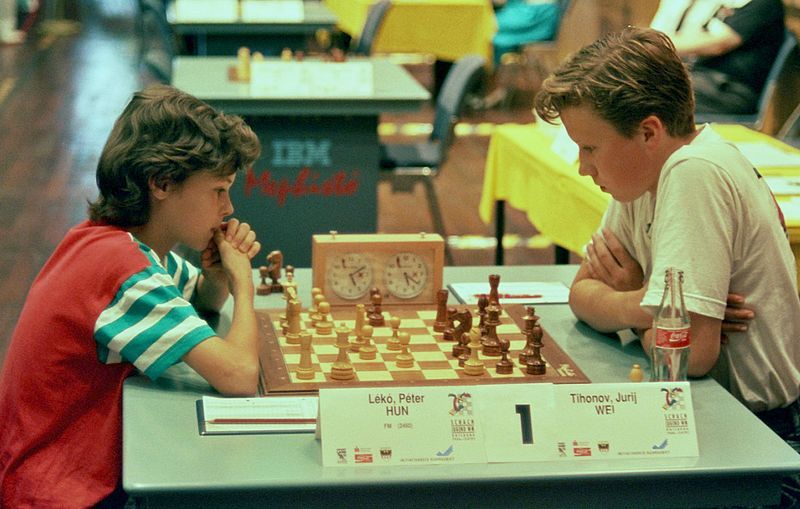
Leko was born into an ethnic Hungarian family in Subotica. When he was one year old, the family moved to Szeged in Hungary. His father introduced him to chess shortly before his seventh birthday, providing a standard set that sparked immediate interest. Leko began entering tournaments at age nine.
His first coach, Tibor Károlyi, started working with him in 1989. They collaborated until shortly before Leko’s grandmaster title, reuniting from 1998 to 2000. He also trained briefly with IM Gaspar Mathe around age ten. Training was disciplined and focused on fundamentals, which laid the foundation for Leko’s renowned positional understanding and endgame precision.
As a junior, Leko competed successfully in World Youth Championships: bronze in U10 (1989), bronze in U12 (1990), fourth in U14 (1992), silver in U14 (1993), and gold in U16 (1994). He earned the International Master title in 1992. His rapid ascent continued with GM norms at events like the First Saturday tournament in Budapest, Leon (where he shared third with Anatoly Karpov and Veselin Topalov in 1993), and Hoogovens in 1994. At just over 14, he became the youngest GM, a record that highlighted his prodigious talent in an era dominated by established stars and the emerging Polgár sisters.
Leko’s early style emphasized solidity over flashy tactics. He absorbed classical principles deeply, favoring sound pawn structures and long-term planning. This approach, combined with hard work on openings, allowed him to compete against much older and more experienced players early on.
Rising Through the Ranks (Mid-1990s to Early 2000s)
Leko’s post-GM career showed steady improvement. In 1995, he won Copenhagen with 8/11 and shared third at Dortmund (5/9) with Vasyl Ivanchuk. A loss in the last round at Belgrade kept him from higher honors, but he climbed the rankings. By early 1998, he was 16th in the world.
Key results included second at Tilburg 1998 behind Viswanathan Anand, fourth at Dortmund 1999, and fourth at Linares 1999. His breakthrough came at Dortmund 1999, where he scored 5/7 to finish half a point ahead of Vladimir Kramnik. It was his first major super-tournament victory and the site where he met his future wife, Sofia Petrosian (daughter of Armenian GM Arshak Petrosian, who later became his trainer).
In 1999, Leko entered the FIDE World Championship knockout in Las Vegas. He defeated Christian Bauer but fell to Sergei Movsesian in rapid tiebreaks. In January 2000, he convincingly beat FIDE World Champion Alexander Khalifman 4½–1½ in a match in Budapest. He entered the top 10 that month (No. 6 with 2725) and stayed there consistently for years, except briefly in 2002.
Results in 2000–2001 were solid but not dominant: shared second at Corus 2000, shared last at Linares, second at Dortmund, and a win in a Chess960 match against Michael Adams. He exited early in the 2000 and 2002 FIDE knockouts. By this point, Leko was a reliable top-10 player known for resilience.
The Dortmund 2002 Triumph and Path to the World Championship
The 2002 Dortmund tournament served as a Candidates event under the Prague Agreement for the Classical title held by Kramnik. Leko, ranked eighth in the world, performed strongly in a hybrid format: group stage followed by knockout.
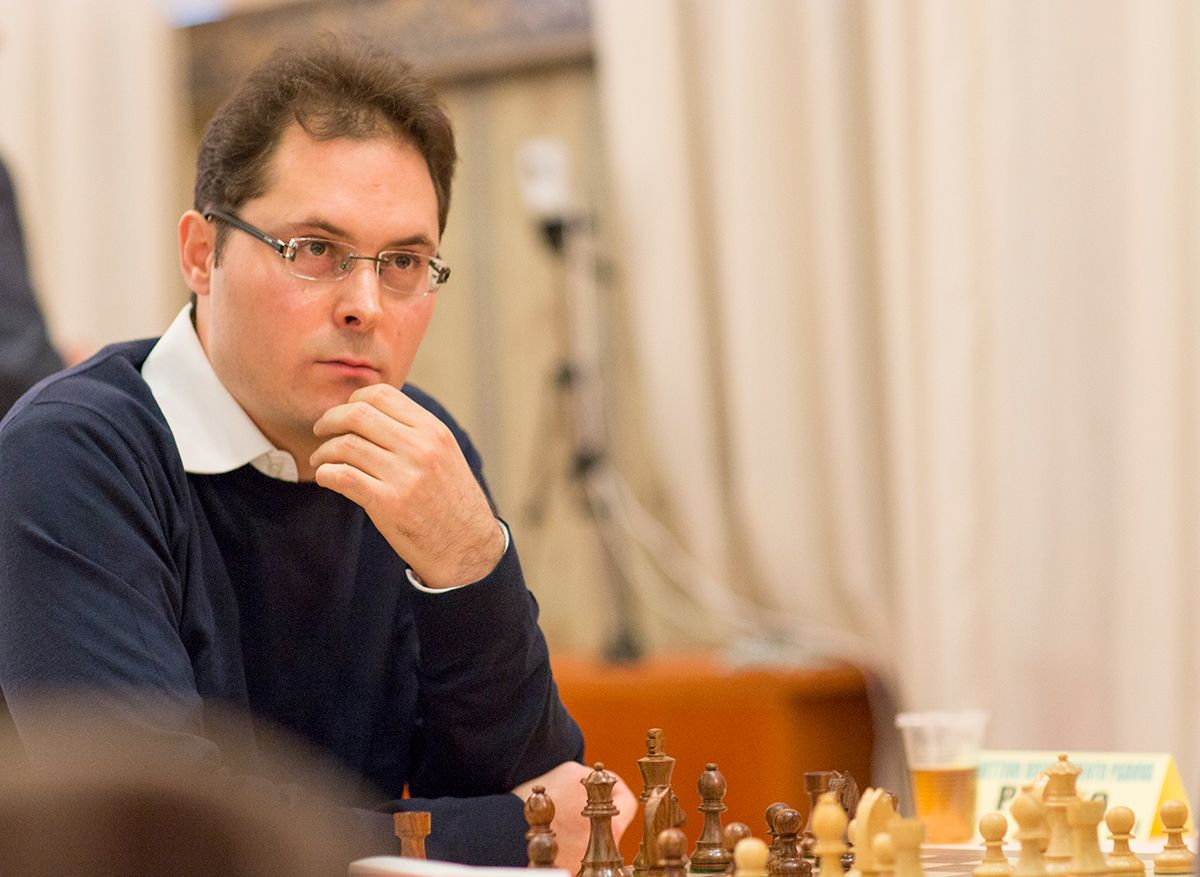
In Group B, he finished second behind Evgeny Bareev. He then defeated Alexei Shirov 2½–½ in the semifinals. In the final against Veselin Topalov (who had a grueling semi), Leko won 2½–1½. This victory made him the official challenger to Kramnik for the Classical World Championship.
Momentum carried into 2003: Leko led Hungary to team silver at the Olympiad (unbeaten on board one) and shared first at Linares with Kramnik, half a point ahead of Anand and Garry Kasparov—ending Kasparov’s long winning streak in super-tournaments. He reached world No. 4.
The 2004 Classical World Championship Match: So Close to Glory
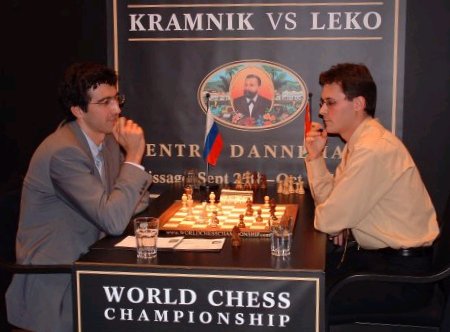
After delays, the 14-game match against Kramnik took place in Brissago, Switzerland, from September 25 to October 18, 2004. Leko’s seconds included Vladimir Akopian, Arshak Petrosian, and Vladislav Tkachiev.
The match was tense and high-level. Kramnik won Game 1 dramatically. Several short draws followed. Leko equalized in Game 5 with a Queen’s Gambit Declined, converting a pawn-up rook-and-bishop endgame. Game 8 was a masterpiece: Leko, with Black, played the Marshall Attack in the Ruy Lopez. Kramnik’s queen sacrifice (prepared with computers) backfired against Leko’s sacrificial combination (26...Bxf3 etc.), giving Leko the lead.
Leko needed only draws in the remaining games to win the title (a 7–7 draw would let Kramnik retain). Games 9–13 were drawn, with Leko defending precisely. In the final Game 14, Kramnik played aggressively against Leko’s Caro-Kann (Advance Variation). Leko tried to simplify into a drawable endgame, but Kramnik broke through. Leko resigned, and the match ended 7–7. Kramnik retained the title.
This remains one of chess history’s closest calls. Leko joined players like Akiba Rubinstein and Viktor Korchnoi as those who came agonizingly close without claiming the crown. The match showcased Leko’s preparation, resilience, and ability to trouble even the best under pressure.
Post-2004 Career: Continued Success and Solid Results
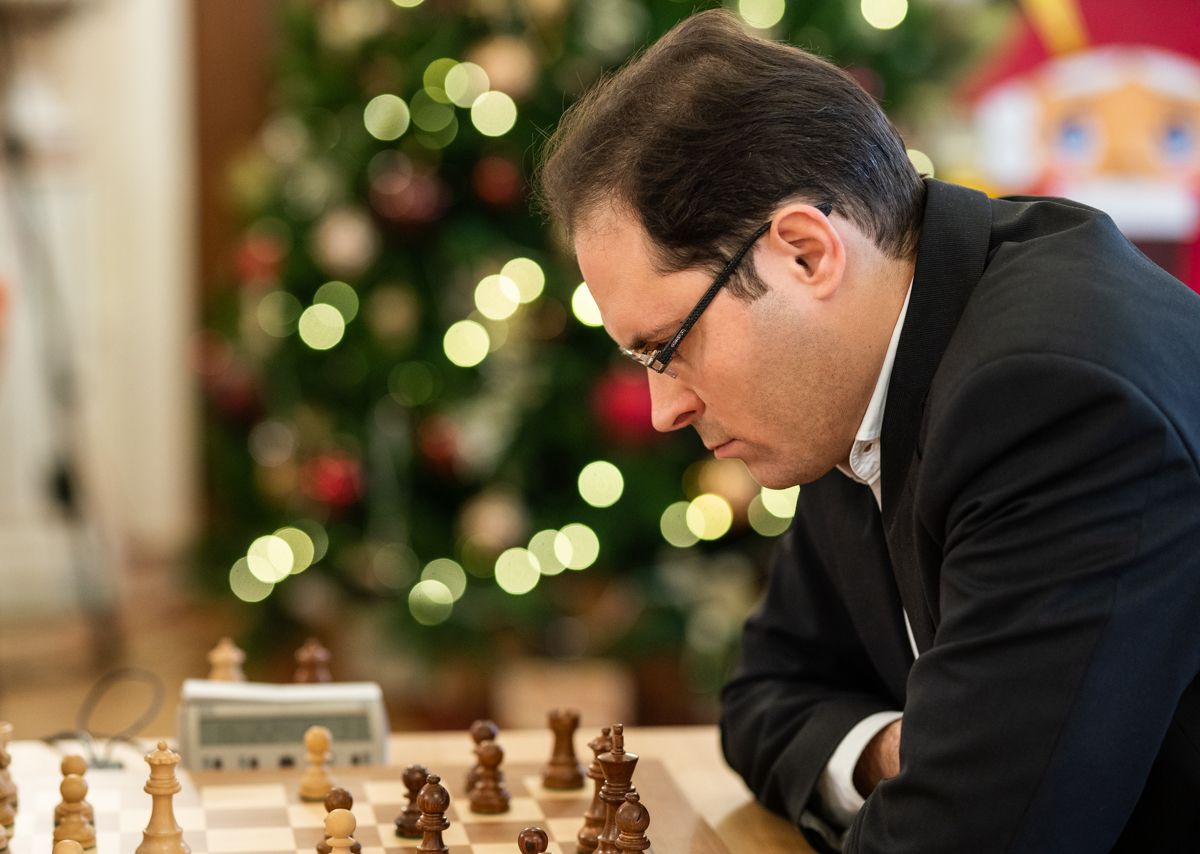
Leko rebounded in 2005 by winning Corus (Wijk aan Zee) with 8½/13 and placing fourth at Linares. He finished fifth (6½/14) in the 2005 FIDE World Championship in San Luis. In 2006, he shared first at the inaugural Tal Memorial, completing victories at all major elite events (Dortmund, Linares, Corus/Wijk, Tal). He also beat Anatoly Karpov in a rapid match.
In 2007, Leko qualified for the Mexico City World Championship tournament via Candidates wins over Mikhail Gurevich and Evgeny Bareev. He scored 7/14 for fourth place behind Viswanathan Anand. He won the ACP World Rapid Chess Cup that year.
Later highlights included a third Dortmund win in 2008 (4½/7) and individual gold on board one at the Dresden Olympiad. He participated in the FIDE Grand Prix cycle but did not advance to further Candidates. His rating stayed elite into the late 2000s and 2010s, though gradually declining from the peak as younger talents rose.
Leko has remained active into the 2020s, competing in events like the World Cup (reaching later rounds as recently as 2025) and maintaining a rating around 2670–2700, placing him in the world top 50. He serves as a respected commentator, known for clear, insightful analysis.
Olympiad and Team Achievements
Representing Hungary across eight Olympiads, Leko earned two team silver medals and one individual gold medal. He also secured team bronze and silver plus an individual silver at three European Team Championships. His board-one performances provided stability and leadership for the Hungarian team.
Playing Style and Legacy
Leko’s style is characterized by deep theoretical knowledge (especially with 1.e4 as White and various solid defenses as Black, including the Caro-Kann, Ruy Lopez, and Queen’s Indian), precise calculation, and endgame mastery. He earned a reputation for solidity—high draw rates in elite play—but delivered wins against the strongest opponents when opportunities arose. His preparation was meticulous, often neutralizing aggressive players.
Critics sometimes called him “drawish,” but this understates his impact. In an era of Kasparov, Kramnik, Anand, and Topalov, maintaining top-10 status for over a decade and challenging for the title required exceptional skill. He influenced opening theory significantly and mentored players like his protégé Vincent Keymer.
Off the board, Leko is married to Sofia Petrosian; her father Arshak has been a long-time trainer and second. Leko values family and a balanced approach to chess.
Notable Games and Contributions
Leko produced many high-quality games. Game 8 of the 2004 match stands out for its tactical depth against Kramnik’s preparation. His win over Kasparov at Linares 2003 ended a major streak. Victories at elite events often featured patient maneuvering turning into decisive advantages.
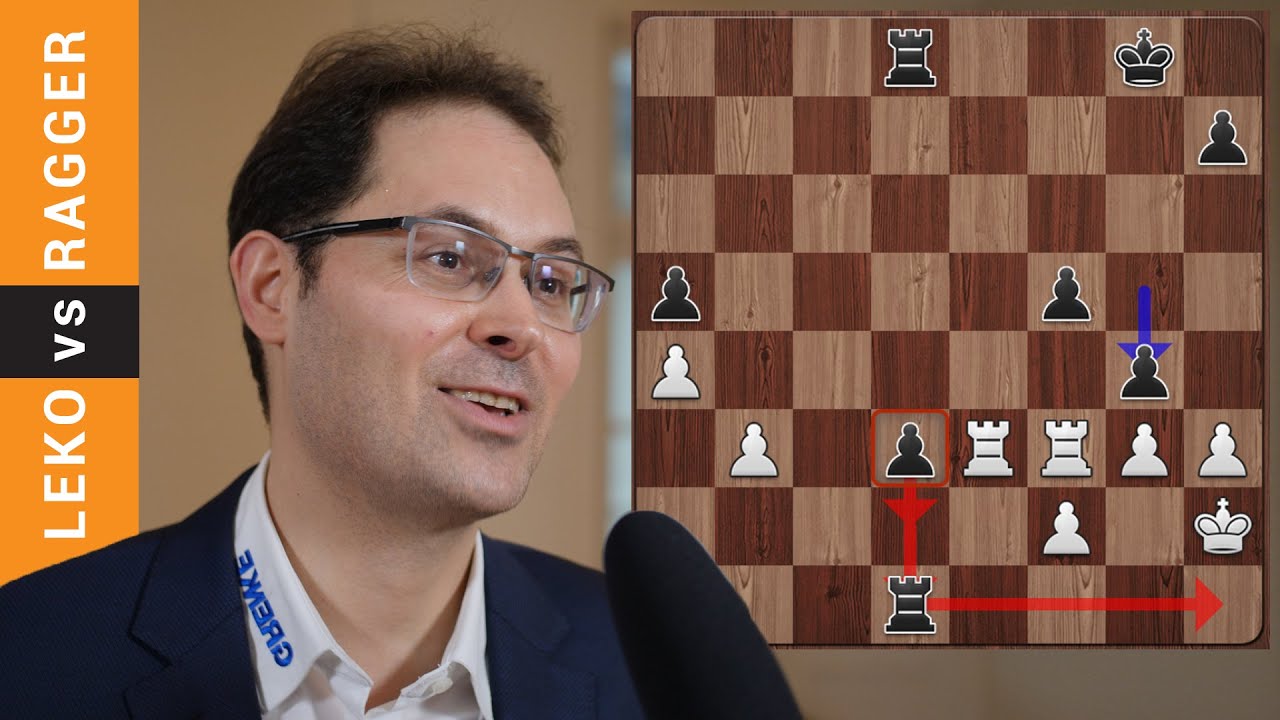
As a commentator, Leko brings calm expertise to broadcasts, explaining complex positions accessibly. He has contributed to chess culture through analysis and promotion of the game in Hungary and beyond.
Conclusion: A Lasting Impact
Peter Leko’s career trajectory—from child prodigy in Szeged to world championship challenger and elite stalwart—exemplifies dedication, intelligence, and resilience. Though he never became world champion, his near-miss in 2004, multiple super-tournament wins, record-breaking GM title, and Olympiad contributions secure his place among chess greats. In an increasingly sharp, engine-influenced era, Leko represented classical values: preparation, solidity, and fighting spirit.
Today, at around 46, Leko continues to compete and commentate, inspiring new generations. His story reminds us that greatness in chess lies not only in titles but in consistent excellence and memorable battles at the highest level. With a peak rating near 2760, decades in the top echelon, and a legacy of sportsmanship, Peter Leko stands as one of Hungary’s finest chess ambassadors and a true “Iron Man” of the royal game.