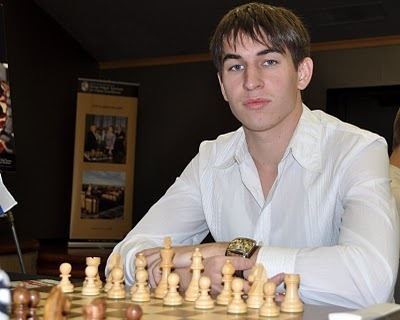
Dmitry Vladimirovich Andreikin was born on February 5, 1990, in Ryazan, a city in the Russian SFSR of the Soviet Union, located southeast of Moscow along the Oka River. Like many top chess players of his generation, he developed an interest in the game during early childhood. His early training under coach Viktor Alexandrovich Pozharsky laid a strong foundation, and Andreikin has publicly expressed gratitude for the mentorship that shaped his fundamentals.
Andreikin’s prodigious talent became evident quickly. In 1999, at age nine, he won the Under-10 division of both the World Youth Chess Championships and the Russian Youth Championships. At the 1999 World event, he defeated a young player who would later become a fellow grandmaster. He finished as runner-up in the same Under-10 category in 2000. By 2001, still only 11 years old, he had earned the FIDE Master title with a rating above 2200. His progress continued steadily: he became an International Master in 2003 as his rating surpassed 2400.
In 2004, Andreikin came close to major junior success, nearly winning the Under-14 World Youth Championship but losing on tiebreak to Ildar Khairullin. That same year, he participated in a qualifier for the Russian Championship, scoring a respectable 5/9 as an IM, including a win over GM Evgeny Gleizerov. These results highlighted his ability to compete against stronger, more experienced players even as a teenager.
Andreikin’s path to the Grandmaster title was methodical. He achieved his first GM norm in 2005 at the European Individual Championship with a 6/10 score. Although his rating reached 2495 in April 2005, he crossed the 2500 barrier in July 2006. His second norm came at the 2006 Aeroflot Open (5.5/9), and the third at the 2007 Moscow Open. In 2007, at the age of 17, Dmitry Andreikin was awarded the Grandmaster title, marking him as one of the promising young talents in Russian and world chess.
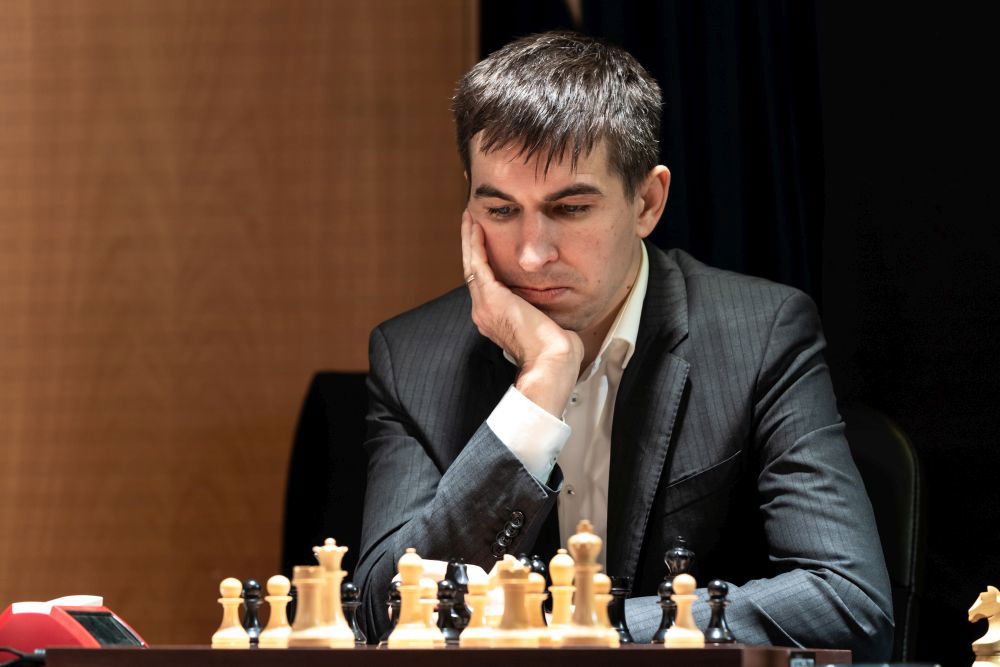
As a young GM, Andreikin established himself among the world’s top juniors. In 2008, he won the 4th Inautomarket Open in Minsk and tied for third to seventh in the Chigorin Memorial. In 2009, he tied for first to third with Yuriy Kuzubov and Rauf Mamedov at the SPICE Cup A (category 16) in Lubbock, Texas. He also won the Russian Junior Championship in 2009 and 2010.
The pinnacle of his junior career came in 2010 when, at age 20, he won the World Junior Chess Championship in Chotowa, Poland, with a strong score of 10/13. This victory earned him the informal title of “chess prince” and solidified his status as a leading player of the 1990 generation, which included names like Magnus Carlsen, Sergey Karjakin, Ian Nepomniachtchi, and Maxime Vachier-Lagrave. Andreikin had not only survived but thrived in a highly competitive cohort.
Breakthrough into the Elite (2011–2013)
Andreikin’s transition to senior competition was smooth. In 2011, he tied for second-third at the Baku Open. In February 2012, he tied for fourth-eighth in the strong Aeroflot Open. Later that year, he achieved one of his career-defining results by winning the 65th Russian Chess Championship in Moscow. The main event featured many decisive games and ended in a six-way tie at the top. Andreikin advanced to a rapid playoff and performed exceptionally, winning three of five games to secure the title over strong competitors including Sergey Karjakin and Peter Svidler. This victory coincided with him crossing the 2700 Elo barrier, confirming his entry into the super-GM ranks.
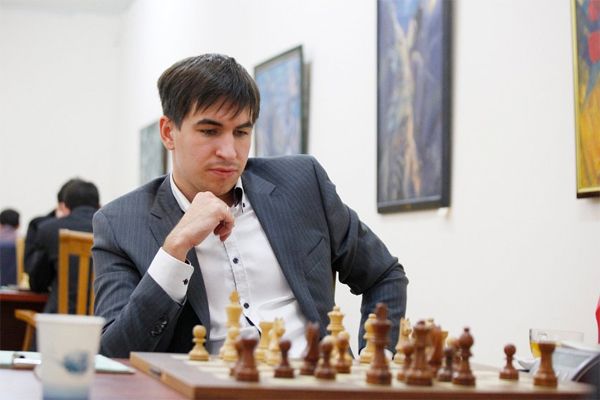
In 2013, Andreikin delivered a standout performance at the FIDE World Cup in Tromsø, Norway. Seeded 21st, he defeated lower-rated opponents in the early rounds before upsetting higher seeds. He beat Sergey Karjakin in round four, then continued with victories against other strong grandmasters to reach the final. There, he faced Vladimir Kramnik and lost the match 1½–2½, finishing as runner-up. This result qualified him for the 2014 Candidates Tournament, a significant milestone.
At the 2013 Tal Memorial, the lowest-rated participant in a field of elites, Andreikin remained undefeated with eight draws and a notable win over Kramnik, sharing third to fifth place. These results demonstrated his resilience and tactical sharpness against the world’s best.
Candidates and Grand Prix Success (2014)
The 2014 Candidates Tournament in Khanty-Mansiysk tested Andreikin against the absolute elite. As the lowest-rated player, he started slowly but mounted a comeback with key victories, including wins over Veselin Topalov and Levon Aronian. He finished tied for third to fifth with 7/14 points, a respectable result that earned rating points and respect. Though he did not advance further in the world championship cycle at that time, his performance affirmed his place among top contenders.
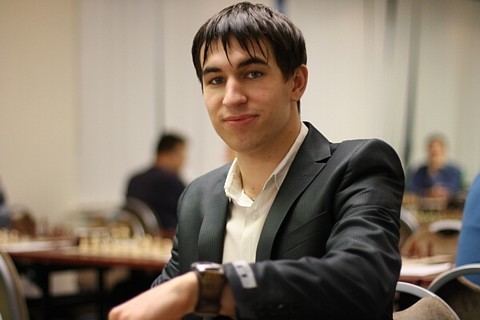
Later in 2014, Andreikin achieved another major success by winning the Tashkent leg of the FIDE Grand Prix 2014–15. He scored 7/11 ahead of stars like Hikaru Nakamura, Shakhriyar Mamedyarov, and Fabiano Caruana, posting a performance rating of 2852. While his other Grand Prix results were less spectacular and he was eliminated in the 2015 World Cup round of 16 by eventual winner Karjakin, the Tashkent victory highlighted his ability to peak in elite round-robin events.
Mid-Career Consistency and Second Russian Title (2015–2018)
Andreikin maintained a rating consistently above 2700 throughout much of this period. His peak classical rating reached 2743 in June 2016, with a peak world ranking of No. 18 in January 2015. He excelled in open tournaments and team events. In 2016, he won the Hasselbacken Open in Stockholm (on tiebreak), the Abu Dhabi Chess Festival, and the European Blitz Chess Championship in Tallinn. He also contributed to team successes, including with the Macedonian club Alkaloid in the European Club Cup.
In 2017, he won gold in the men’s rapid event at the IMSA Elite Mind Games in Huai’an, China. In 2018, Andreikin claimed his second Russian Championship title in Satka. After a strong classical performance (undefeated with three wins), he defeated Dmitry Jakovenko in the rapid playoff to secure the win. That year, he also won the Xtracon Chess Open in Copenhagen.
Team and Continued Success (2019 Onward)
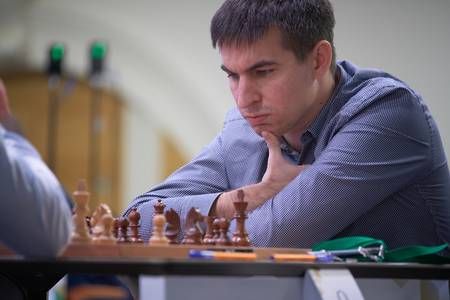
In 2019, Andreikin was part of the Russian team that won both the World Team Championship and the European Team Championship. He also defeated Ding Liren in a match (+1-0=3). His blitz and rapid skills shone brightly; he was the only player to defeat Magnus Carlsen at the 2019 World Blitz Championship.
The early 2020s saw Andreikin remain active on the elite circuit. In the 2022 FIDE Grand Prix, he performed well in the Belgrade leg, winning his group and defeating Anish Giri in the semifinals before falling to Richard Rapport in the finals. He placed fifth overall in the series standings. That year, he also excelled online, winning 10 Titled Tuesday events on Chess.com and reaching the finals of the Chess.com Rapid Chess Championship (losing to Nepomniachtchi after beating top players like Nakamura, So, and Caruana). He streams on YouTube under the handle FairChess.
Andreikin switched federation representation to FIDE in 2022. He continued competing successfully in various formats. In November 2025, he won a match against Zhu Jiner (3–1 classical, 2½–1½ rapid). In May 2026, he won the Chess.com King of the Hill Championship, becoming the first super-GM to claim that community event title after a strong comeback through the losers’ bracket.
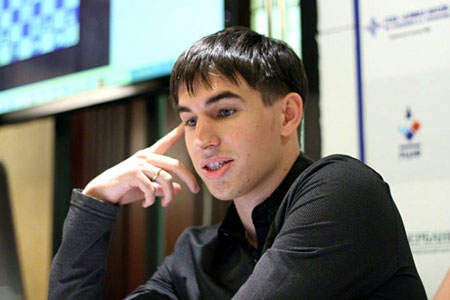
As of May 2026, Andreikin holds a classical rating of 2710 (world No. 30), with rapid 2686 and blitz 2688. He remains the second-highest rated player from Russia behind Ian Nepomniachtchi. His career earnings from tournaments exceed $600,000, reflecting consistent participation at high levels.
Playing Style and Legacy
Andreikin is known for a solid, versatile style that combines deep opening preparation with strong middlegame understanding and endgame technique. He has scored notable victories against virtually all top players of his era, including wins over Kramnik, Carlsen (in blitz/rapid contexts), Aronian, and others. His ability to perform under pressure in playoffs and tiebreaks has been a recurring strength, evident in his Russian Championship wins and World Cup run.
Throughout his career, Andreikin has balanced individual ambitions with team contributions and online engagement. From a young talent in Ryazan to a two-time Russian champion, World Junior champion, World Cup finalist, Candidates participant, and Grand Prix winner, his trajectory exemplifies dedicated preparation and competitive resilience in one of the world’s most demanding sports.
As he enters his late 30s, Andreikin continues to compete at a high level, adding to a body of work that places him among the most accomplished Russian chess players of the post-Soviet era. His story is one of steady ascent through the ranks, marked by key triumphs that have left a lasting mark on international chess.